
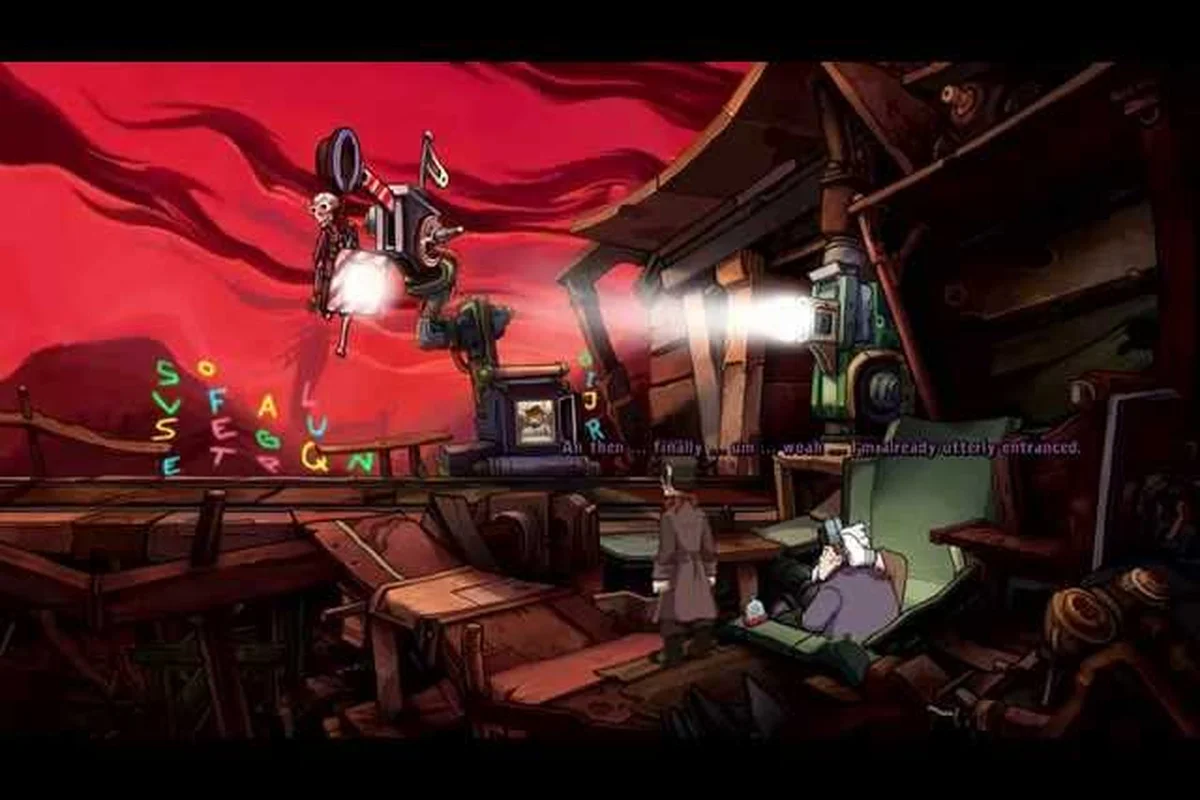
The Deponia lever puzzle sits among the most notorious roadblocks in the series, yet its logic is far more forgiving than players initially assume. Understanding how the game structures sequence-based interactions — from the Ulysses lever array to the Elysium control panels — transforms these moments from frustrating guesswork into satisfying deductions. The Complete Journey edition even includes minigame help screens that provide nudge-level hints without spoiling the solution, which means you can learn the underlying rules while still earning the satisfaction of cracking each machine yourself.
What makes these puzzles genuinely interesting is that they rarely test reflexes or timing. Instead, they reward careful observation of environmental cues, dialogue hints, and the physical layout of each machine. Whether you are wrestling with a combination lock mechanism or a multi-step item puzzle that requires inserting objects in a specific order, the core skill remains the same: reading the scene like a detective rather than a button-masher. This guide breaks down the recurring logic patterns, explains how the minigame help screens work, and offers spoiler-light strategies for every major lever-based obstacle across the trilogy.
Understanding the Deponia Lever Puzzle Logic
The lever puzzle in Deponia follows a consistent design philosophy: each machine presents a set of interactive elements that respond to inputs in a predictable sequence, and the environment provides the clues you need to deduce that sequence. Unlike pure trial-and-error challenges, these puzzles are built around cause-and-effect chains where pulling one lever changes the state of another component, often resetting or unlocking new options.
The most common pattern involves three to five levers arranged in a row or circle, each connected to a visual indicator such as lights, gears, or pressure gauges. The solution requires activating them in a specific order, which the game communicates through subtle environmental storytelling. For example, a control panel might have color-coded wires leading to different machinery, or a nearby note might describe the startup procedure in vague terms. The deponia sequence puzzle archetype appears in every chapter, but the underlying rules stay remarkably consistent.
Another recurring structure is the deponia machine puzzle, where levers control physical processes like conveyor belts, crushers, or energy distribution. These often require you to observe the machine's current state, predict how each lever alters that state, and then execute a multi-step plan. The key difference from the simpler sequence puzzles is that machine puzzles frequently require item interaction — you might need to place a wrench on a specific gear or wedge a crowbar into a mechanism before pulling the correct lever.
The Role of Minigame Help Screens
The Complete Journey edition introduced dedicated minigame help screens that offer graduated hints for each puzzle. According to the official Deponia: The Complete Journey Steam page, these screens give nudge-level hints without spoiling the solution, making them ideal for players who want guidance rather than a full walkthrough. The help system typically presents three tiers: a general observation tip, a mechanical explanation, and a direct nudge toward the first step.
| Help Tier | What It Reveals | Spoiler Level |
|---|---|---|
| Observation Tip | Points out environmental clues you may have missed | Minimal |
| Mechanical Hint | Explains how the levers interact with each other | Moderate |
| Direct Nudge | Suggests the first lever to pull or item to use | Significant |
This tiered approach means you can engage with the deponia logic puzzle at your own comfort level. If you only want a gentle push, the observation tip might be enough to spark the connection. If you have been stuck for twenty minutes, the direct nudge can break the logjam without robbing you of the remaining steps. The system respects player agency while acknowledging that some puzzles benefit from a helping hand.
Decoding the Sequence Puzzle Patterns
Sequence puzzles in Deponia share a few structural DNA strands that, once recognized, make future encounters far less intimidating. The most common pattern is the state-change loop, where pulling a lever toggles not only its own indicator but also affects neighboring levers. This creates a web of dependencies that you must untangle before the machine accepts your input sequence.
A classic example involves three levers labeled A, B, and C. Pulling A activates its light but resets B. Pulling B activates its light but deactivates A. Pulling C activates its light and resets both A and B. The solution requires you to recognize that C must be pulled last, because it resets everything else. This kind of dependency mapping is the heart of most deponia sequence puzzle designs, and drawing a quick diagram on paper or in your head often cracks the case faster than random experimentation.
Another frequent pattern is the timed sequence, where levers must be pulled in order within a short window. These are rarer in the series but appear in a few key moments, particularly in Chapter 3. The trick here is to memorize the order before touching the first lever, then execute confidently. The game usually telegraphs the required order through a visual cue, such as lights flashing in sequence or a dial spinning through positions.
| Puzzle Pattern | How to Identify It | Typical Solution Approach |
|---|---|---|
| State-Change Loop | Levers affect each other's indicators | Map dependencies, find the lever that resets others |
| Timed Sequence | Lights or sounds indicate an order | Memorize the sequence, then execute quickly |
| Item-Gated Lever | A lever is stuck or missing a handle | Find the correct item and apply it first |
| Feedback Lock | Levers produce sounds or vibrations | Listen for pitch changes to confirm correct order |
The deponia item puzzle variant deserves special attention because it combines inventory management with lever mechanics. In several instances, you cannot pull a lever because it is broken, jammed, or missing entirely. The solution involves finding the right tool — a replacement handle, a lubricant, or a makeshift lever — and applying it to the mechanism. These puzzles test your ability to connect inventory items to environmental problems, which is a core Deponia skill.
The Ulysses Lever Array Breakdown
One of the most discussed lever puzzles in the series is the Ulysses lever array in Chapter 2, which combines multiple patterns into a single challenge. Players encounter a control room with six levers, each connected to a different subsystem of the floating city. The game provides a maintenance manual that describes the startup order in technical jargon, but the actual solution requires interpreting that jargon through the lens of the machine's physical layout.
According to community reports, the key insight is that the manual describes subsystems in the order they appear on the wall, not the order they should be activated. This deliberate misdirection is a hallmark of Deponia's puzzle design — the game often tells you the truth, but not in the way you initially interpret it. The deponia logic puzzle here rewards players who question their assumptions and test alternative interpretations of the clues.
Machine Puzzle Strategies That Actually Work
The deponia machine puzzle encounters demand a different skill set than pure sequence challenges. These puzzles simulate mechanical processes, which means you need to understand flow and feedback rather than just order. A conveyor belt puzzle, for instance, might require you to activate levers in a way that moves an object through multiple stations, with each station performing a different operation.
The most effective strategy for machine puzzles is to observe before touching. Watch the machine cycle through its default state at least once, noting which components move, which lights activate, and which sounds occur. This baseline observation often reveals the intended path. For example, if a machine has a crusher that cycles automatically, you know the lever you need to pull must coordinate with that cycle rather than fight against it.
Another powerful approach is reverse engineering the goal state. Instead of asking "what do I pull first?", ask "what needs to be true at the end?" If the goal is to deposit an item into a hopper, work backward: the hopper door needs to be open, which requires the conveyor to be aligned, which requires a specific lever position. This backward-chaining method turns an overwhelming array of options into a focused checklist of prerequisites.
| Machine Puzzle Type | Core Mechanic | Key Strategy |
|---|---|---|
| Conveyor Routing | Levers redirect belts | Trace the item's path from start to goal |
| Energy Distribution | Levers route power | Identify which systems need power first |
| Crusher Timing | Levers coordinate with cycles | Wait for the cycle, then pull in rhythm |
| Multi-Stage Assembly | Levers activate different tools | Build the item step by step, checking each stage |
The chaos on deponia puzzles in the third game push these mechanics further by adding environmental hazards and time pressure. In Chaos on Deponia, several machine puzzles require you to activate levers while avoiding steam jets, moving platforms, or electrical arcs. These encounters test your ability to plan a sequence while accounting for physical movement, which adds a layer of spatial reasoning to the standard logic challenge. If you are struggling with these, the Chaos on Deponia puzzle solutions guide offers a comprehensive breakdown of every major obstacle in that game.
The Coffee Machine Conundrum
One of the most infamous deponia machine puzzle moments is the coffee machine in the first game, which combines item collection, sequence logic, and timing into a single frustrating encounter. Players must gather multiple ingredients, prepare them in the correct order, and then operate the machine's levers to brew a cup that meets the exacting standards of a particular character.
Community data suggests that most players fail this puzzle not because the logic is obscure, but because they attempt to interact with the machine before gathering all necessary items. The puzzle is designed to be solved in phases: first collect everything, then prepare each ingredient, then operate the machine. Skipping ahead to the lever-pulling phase without the proper preparations guarantees failure, which teaches an important lesson about Deponia's puzzle philosophy — preparation beats improvisation.
Practical Tips for Solving Lever Puzzles Faster
While each lever puzzle in Deponia has its own unique solution, several universal strategies can reduce your solving time across the entire trilogy. These tips come from analyzing the game's puzzle design patterns and from community reports about what works consistently.
First, always explore the entire area before touching any lever. Deponia hides clues in dialogue, notes, posters, and environmental details. A character might mention a machine's startup procedure in passing, or a whiteboard might contain a diagram that explains the sequence. Rushing to the levers without this context is the most common mistake players make.
Second, use the game's save system to experiment freely. Deponia allows you to save at almost any point, which means you can test a hypothesis, observe the result, and reload if it fails. This is not cheating — it is a legitimate problem-solving technique that the game's design implicitly supports. The deponia puzzle skip option in the Complete Journey edition also provides an escape hatch if you are completely stuck, though using it forfeits the satisfaction of solving the puzzle yourself.
Third, pay attention to audio cues. Several lever puzzles in the series use sound to indicate progress. A correct lever pull might produce a satisfying click, while an incorrect one results in a dull thud. These audio feedback mechanisms are easy to miss if you are playing without sound or with music turned up too high.
| Strategy | When to Use It | Why It Works |
|---|---|---|
| Full Exploration First | Always | Gathers all clues before you start |
| Save and Experiment | When you have a hypothesis | Lets you test without permanent consequences |
| Listen for Audio Cues | When levers produce sounds | Confirms correct inputs immediately |
| Draw a Dependency Map | For complex sequence puzzles | Visualizes the relationships between levers |
| Work Backward from the Goal | For machine puzzles | Clarifies which prerequisites matter |
Fourth, take notes on paper or in a text file. Some of the later puzzles, particularly in Goodbye Deponia, involve sequences that are too long to hold in working memory. Writing down the order of lights, the positions of switches, or the sequence of sounds can be the difference between solving a puzzle in minutes and being stuck for an hour. The game does not penalize external note-taking, and many veteran players consider it essential for the hardest challenges.
How the Complete Journey Edition Changes Things
The Complete Journey edition, which bundles all three Deponia games plus the bonus content, introduces several quality-of-life features that affect how you approach lever puzzles. The most significant is the minigame help system, which we discussed earlier, but there are also subtle changes to the puzzle presentation that make certain solutions more discoverable.
According to the official Steam description, the Complete Journey edition adds "minigame help screens that explain tricky puzzles" alongside the full trilogy. This means that if you are playing the bundled version, you have access to hints that were not present in the original individual releases. For players who bounced off the series because of a particularly obtuse lever puzzle, this addition can be the difference between abandoning the game and pushing through to the excellent story payoff.
The deponia sequence puzzle encounters in the Complete Journey edition also benefit from improved visual clarity. Several puzzles received updated graphics that make the connections between levers and their effects more apparent. For example, a puzzle that previously required you to infer which lever controlled which light now includes color-coded cables that make the relationship obvious. This does not make the puzzles trivial — you still need to determine the correct order — but it removes the artificial difficulty of guessing which lever does what.
If you are playing the individual games rather than the Complete Journey edition, you can still solve every lever puzzle with the strategies in this guide. The core logic is identical across versions; only the presentation differs. For a broader overview of the trickiest moments in the series, the Deponia puzzle solutions guide covers the most challenging obstacles from all three games.
The Puzzle Skip Feature
The Complete Journey edition includes a deponia puzzle skip option that allows you to bypass any puzzle after a certain number of failed attempts. This feature is designed for players who want to experience the story without being blocked by a particular challenge. The skip option does not affect achievements or story progression, so using it does not lock you out of any content.
Community opinion on the skip feature is divided. Some players view it as a welcome accessibility option that respects their time, while others feel it undermines the puzzle-solving experience that defines the series. The developers' decision to include it reflects a broader trend in adventure games toward player-friendly options that reduce frustration. If you choose to use the skip, you can always revisit the puzzle in a second playthrough to solve it properly.
Frequently Asked Questions
What is the deponia lever puzzle?
The deponia lever puzzle refers to a recurring puzzle type across the Deponia trilogy where players must pull levers in a specific sequence to activate machinery or progress. These puzzles test observation, logic, and sometimes item usage, and they appear in every chapter of the series.
How do the minigame help screens work in Complete Journey?
The Complete Journey edition adds minigame help screens that provide tiered hints for each puzzle. You can access observation tips, mechanical explanations, or direct nudges depending on how much help you want. The system is designed to prevent frustration without fully spoiling the solution.
Can I skip the lever puzzles if I get stuck?
Yes, the Complete Journey edition includes a deponia puzzle skip option that lets you bypass any puzzle after repeated failures. Using the skip does not affect achievements or story progression, so you can always come back later to solve the puzzle on your own terms.
Are the lever puzzles the same in all three games?
The core logic is consistent, but each game adds new twists. Chaos on Deponia introduces environmental hazards and timing elements, while Goodbye Deponia features longer and more complex sequences. The fundamental skills of observation and dependency mapping apply throughout the trilogy.
What is the best strategy for machine puzzles?
Start by observing the machine's default lever positions, then trace backward from the goal state to isolate which levers matter. Save before experimenting, and listen for audio cues confirming correct inputs. In The Complete Journey, use the built-in minigame help screens for nudge-level hints without spoiling the solution.