
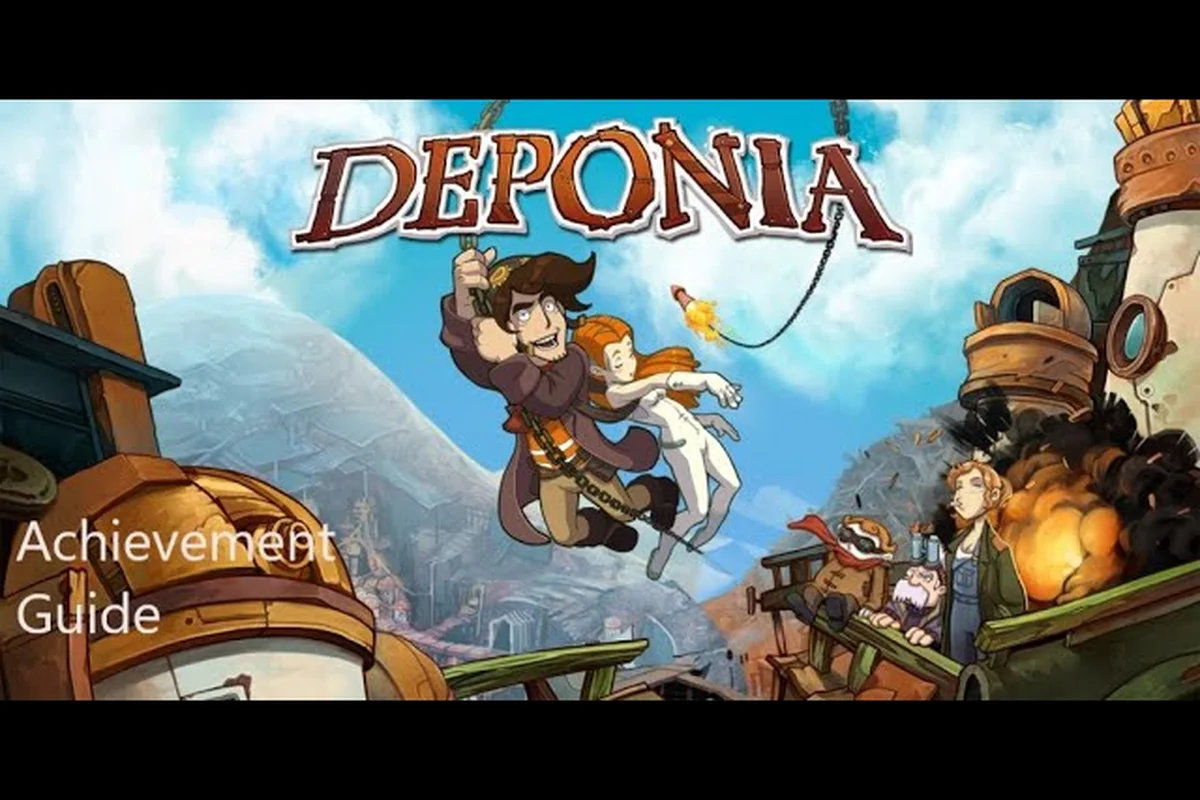
Deponia's droggeljug mode is one of the most bizarre unlockables in modern point-and-click gaming, transforming every scrap of dialogue into a single nonsense word while you wander the junkyard planet. This guide explains exactly how the mode works, what the critical reception says about the base game, and which hardware you need to experience it. Whether you are chasing the absurdist humor or just want to know if your laptop can handle the adventure, the deponia droggeljug mode is a reason to revisit a cult classic, and the deponia system requirements are surprisingly forgiving.
Understanding the Deponia Droggeljug Mode Unlock
The droggeljug mode is not available from the start, which means you need to finish the main campaign before you can flip the world into pure linguistic chaos. According to the Deponia Wikipedia entry, completing the game unlocks this bonus mode, which changes object names, character descriptions, and all spoken dialogue to the single word "Droggeljug." That means every line, every puzzle hint, and every dramatic reveal becomes a monotone chant of the same absurd term, which is exactly the kind of surreal joke that developer Daedalic Entertainment loves to plant for dedicated players.
The unlock condition is straightforward, but the experience itself is anything but. When you activate the mode from the main menu, the entire game world gets a comedic reskin that replaces the script with nonsense while keeping the puzzle logic intact. You still need to solve the same inventory-based challenges, but now you are doing it without any readable context, which turns a familiar playthrough into a test of memory and pattern recognition. For players who know the game inside out, this is a hilarious victory lap; for newcomers, it is a confusing mess that you should avoid until you have seen the credits roll at least once.
What Changes When Droggeljug Mode Is Active
The scope of the modification is surprisingly thorough, because Daedalic did not just swap out a few voice lines. Every character name becomes Droggeljug, every item description collapses into the same word, and even the subtitles follow suit, which means hearing-impaired players lose their usual accessibility net during this mode. The visual presentation stays identical, so you can still recognize characters by their silhouettes and color schemes, but the text-based clues that normally guide you through puzzles vanish completely.
-
Dialogue: All spoken lines and subtitle text become "Droggeljug" with no variation
-
Item descriptions: Inventory tooltips show only the nonsense word instead of useful hints
-
Character names: Everyone from Rufus to the Organon soldiers loses their identity in text
-
Puzzle logic: The underlying mechanics remain unchanged, so solutions still work as intended
-
Hint system: The middle-mouse-button hint feature still highlights interactive objects, which becomes your only lifeline
The hint system becomes essential in this mode, because the usual textual cues are gone and you cannot rely on reading item names to figure out what goes where. Holding the middle mouse button highlights clickable elements on screen, and that visual feedback is the only way to make progress without brute-forcing every combination. Community reports suggest that players who attempt droggeljug mode without using the hint overlay end up stuck for hours, which is why most veterans recommend keeping that feature on during your first nonsense run.
Why Daedalic Added This Absurd Bonus
The droggeljug mode fits perfectly into the game's comedic identity, because Deponia has always leaned into self-aware humor that breaks the fourth wall. The word itself appears throughout the trilogy as a running gag, and giving players the option to reduce the entire script to that one term feels like a natural extension of the joke. It also rewards replayability, because the mode gives experienced players a fresh challenge that forces them to rely on spatial memory rather than reading comprehension.
Critical Reception of the Deponia Series
The deponia game review landscape is split between European outlets that adore the quirky humor and a few Western reviewers who found the puzzle logic frustrating. The game holds a 74/100 Metacritic score on PC, with the PS4 version sitting at 71 and the Switch port dropping to 64, which suggests that the experience translates better on some platforms than others. German publications were especially enthusiastic, with GameStar awarding an 88/100 and calling it "LucasArts from Germany," while 4Players gave it 87/100 and GameSpot settled on an 8/10.
| Review Source | Score | Key Takeaway |
|---|---|---|
| GameStar | 88/100 | Praised the LucasArts-style adventure design |
| 4Players | 87/100 | Loved the humor and hand-drawn art |
| GameSpot | 8/10 | Highlighted sharp writing and clever puzzles |
| GameWatcher | 5/10 | Criticized illogical puzzle solutions |
| Metacritic (PC) | 74/100 | Mixed-to-positive aggregate reception |
The Steam user reviews tell a slightly different story, because the community rating sits at "Very Positive" overall, which indicates that the people who actually bought the game tend to enjoy it more than professional critics. Kotaku called it "sharp, pretty and quirky-as-hell," which captures the general vibe of the reception, and the game has developed a loyal following over the years despite its divisive puzzle design. The main complaints center on moon-logic puzzles that require unintuitive item combinations, which is a common criticism of the entire genre rather than a unique flaw.
Strengths That Define the Experience
The hand-drawn art style is the first thing that grabs your attention, because Daedalic created a vibrant junkyard world that feels alive despite being built from trash. The characters are memorable, the voice acting is solid, and the writing balances slapstick comedy with genuine emotional beats that land surprisingly well. The puzzle design rewards exploration and experimentation, although some solutions require a level of lateral thinking that borders on unfair.
Weaknesses That Frustrate Players
The biggest issue is that some puzzles have solutions that make sense only in hindsight, and the game does not always give you enough clues to figure them out logically. The pacing also drags in the middle chapters, and the inventory can become cluttered with items that have no obvious purpose until much later. For new players, the Deponia beginner guide covers the core mechanics and helps you avoid the most frustrating dead ends, which is especially useful if you plan to attempt droggeljug mode later.
Deponia System Requirements for Windows, Mac, and Linux
| Platform | Release Date | Metacritic Score |
|---|---|---|
| Windows | 2012 | 74 |
| PS4 | Nov–Dec 2016 | 71 |
| Nintendo Switch | 24 Apr 2019 | 64 |
The deponia system requirements are modest by modern standards, which means almost any computer from the last decade can run the game without issues. The minimum specs target Windows Vista and 7, which tells you how old the engine is, and the game requires only 2 GB of RAM and 5 GB of hard drive space. The graphics requirements are equally forgiving, with an OpenGL 2.0 compatible GPU that has 512 MB of video memory being enough to get you through the entire adventure.
| Component | Windows Minimum | macOS Minimum | Linux Minimum |
|---|---|---|---|
| OS | Vista / 7 | OS X Lion (10.7) | Ubuntu 12.04 / 14.04 64-bit |
| CPU | 2.5 GHz single-core or 2 GHz dual-core | 2 GHz dual-core Intel | 2 GHz dual-core |
| RAM | 2 GB | 2 GB | 2 GB |
| GPU | OpenGL 2.0 with 512 MB | OpenGL 2.0 | OpenGL 2.0 with 256 MB |
| Storage | 5 GB HDD | 3.5 GB HDD | 5 GB HDD |
The deponia minimum requirements are so low that even integrated graphics chips from the early 2010s can handle the game, because the 2D art style does not demand much from your GPU. The game runs on the Visionaire engine, which was designed for point-and-click adventures and prioritizes stability over visual fidelity, so you do not need a gaming rig to enjoy the experience. The official Steam store page lists the full specifications and confirms that DirectX 9.0c is required for Windows users, although most modern systems handle this through backward compatibility.
Deponia for Mac: Compatibility and Performance
The deponia for mac version launched on August 6, 2012, just a few months after the Windows release, which made it one of the earlier adventure games to support Apple's platform. The macOS version requires OS X Lion or newer, and the storage footprint is smaller at 3.5 GB, which suggests that the Mac build uses slightly different asset compression. Performance is generally smooth on modern Macs, including Apple Silicon models running through Rosetta 2, because the game is not graphically demanding enough to stress even entry-level hardware.
Linux and Steam Deck Considerations
Linux users can play Deponia through the Deponia: The Complete Journey bundle, which launched on July 8, 2014, and includes all three games in the trilogy. The Linux build requires Ubuntu 12.04 or 14.04 in 64-bit, and the GPU requirement drops to 256 MB of video memory, which is even more forgiving than the Windows version. Steam Deck owners can run the game through Proton, and community reports indicate that it works well with the default compatibility layer, although you may need to remap the middle-mouse-button hint system to a controller button for easier access.
How to Get the Most Out of Droggeljug Mode
Once you have confirmed that your system meets the deponia minimum requirements, you can start planning your droggeljug mode playthrough with a few practical strategies. The mode is designed for veterans, so you should complete at least one normal run before attempting it, because you need to know the puzzle solutions by heart to make progress without readable text. The hint overlay is your best friend here, and you should map it to an easily accessible button if you are playing with a controller.
-
Finish the main campaign first to unlock the mode and build your mental map of the game world
-
Keep the hint system enabled so you can identify interactive objects without reading descriptions
-
Take notes on puzzle solutions during your first playthrough to reference during the nonsense run
-
Play in short sessions because the repetitive dialogue can become grating after extended periods
-
Use a walkthrough if you get stuck, since the Deponia walkthrough guide covers every puzzle in order
The achievement hunting angle adds another layer of appeal, because completing the game in droggeljug mode demonstrates mastery that goes beyond a standard playthrough. Some players report using the mode as a party trick, streaming their nonsense run to friends who have never seen the game, which turns the limitation into entertainment. The mode also works well as a memory test, because you can challenge yourself to complete puzzles without relying on the hint system at all, although that approach requires near-perfect recall of every item location and interaction.
The Best Way to Experience the Mode
The ideal setup is to play the game normally, then immediately start a new game with droggeljug mode enabled while the puzzle solutions are still fresh in your mind. This approach lets you appreciate the comedic contrast between the serious story moments and the absurd dialogue replacement, because you remember what the characters are actually saying. The mode also reveals how much of the game's atmosphere depends on writing, since removing the text strips away the emotional context and leaves only the visual storytelling.
Frequently Asked Questions
What is the deponia droggeljug mode?
The deponia droggeljug mode is a bonus unlockable that replaces all character names, item descriptions, and spoken dialogue with the single word "Droggeljug." It unlocks after completing the main campaign and serves as a comedic replay option for players who want a fresh challenge. The puzzle logic remains unchanged, so you must rely on memory and the hint system.
How do I unlock droggeljug mode in Deponia?
You unlock droggeljug mode by finishing the main story campaign, which triggers the bonus content to appear in the main menu. There are no additional requirements or hidden conditions, so you just need to see the credits roll once. After that, you can start a new game with the mode enabled at any time.
What are the deponia minimum requirements for PC?
The deponia minimum requirements for PC are Windows Vista/7, a 2.5 GHz single-core or 2 GHz dual-core CPU, 2 GB RAM, an OpenGL 2.0 GPU with 512 MB video memory, DirectX 9.0c, and 5 GB HDD space. These modest specs run the Droggeljug mode fine, since it only swaps dialogue and names to "Droggeljug" without altering performance.
Does deponia for mac support droggeljug mode?
Yes, the deponia for mac version includes droggeljug mode because it is part of the base game content. The macOS build requires OS X Lion or newer, 2 GB of RAM, and a 2 GHz dual-core Intel processor. The mode functions identically to the Windows version, so Mac players can enjoy the same absurdist replay experience.
Is the deponia game review score accurate?
The 74/100 Metacritic score is only partially accurate—Steam's "Very Positive" rating better reflects fan reception. Critics like GameStar (88/100) praised the humor and art, while GameWatcher (5/10) disliked puzzle logic. Since Droggeljug mode replaces all dialogue with one word, judge the game on its core point-and-click charm, not review averages.