
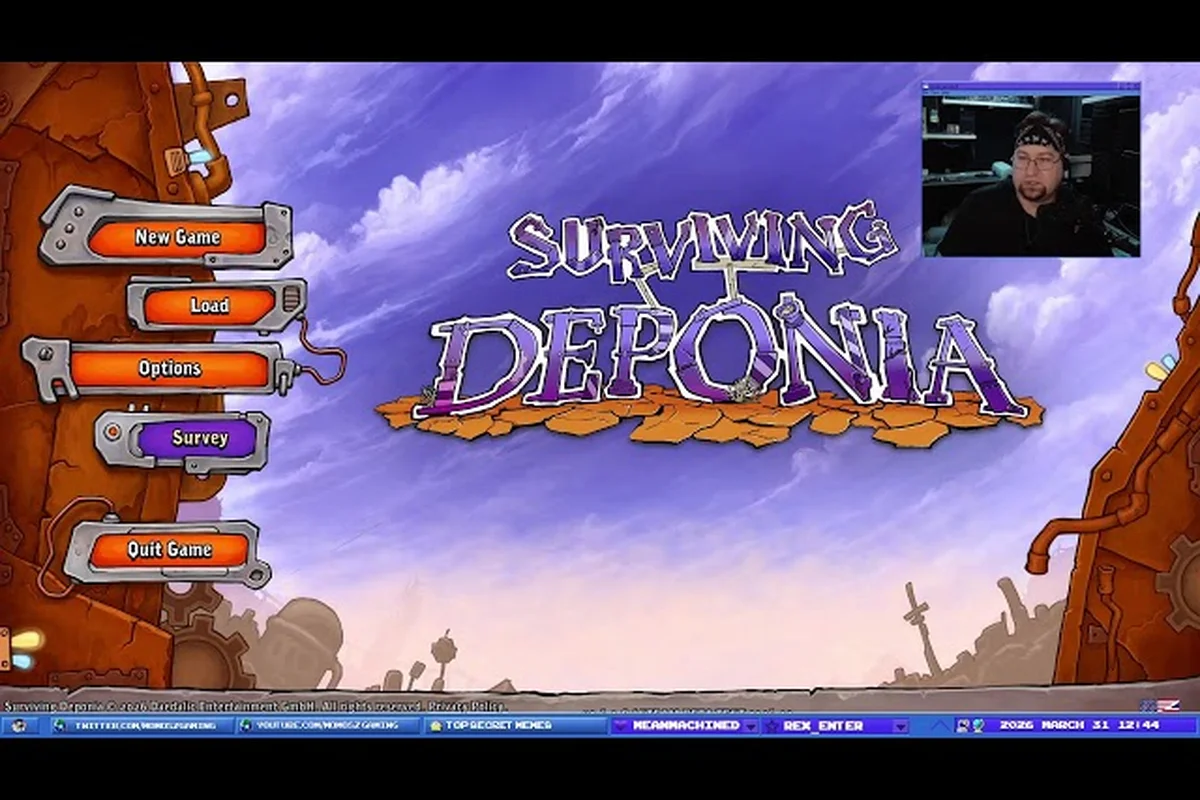
Surviving Deponia characters carry a heavy legacy. The 2026 survival-crafting game from Daedalic Entertainment and AtomicTorch Studio drops players into the harsh, junk-filled landscape of Deponia, and it brings back familiar faces while introducing a twist that longtime fans will recognize immediately. Understanding who is who matters because the game leans on character-driven storytelling to differentiate itself from other survival titles, and knowing the cast helps you make better narrative and gameplay decisions from the first hour.
The most striking hook involves the three Rufus clones from Goodbye Deponia, who now share the spotlight with the original cast in a completely new survival context. If you have ever wondered how the chaotic inventor and his duplicates translate into a base-building, resource-management experience, this breakdown covers every essential detail, from the main players to the supporting roles that shape the world around you. If you have ever wondered how the chaotic inventor and his duplicates translate into a base-building, resource-management experience, this breakdown covers every essential detail, from the main players to the supporting roles that shape the world around you, and you can also dig into the full mechanical scope of that world in our Surviving Deponia Features overview, which maps out the core systems you’ll be juggling alongside those quirky characters.
Surviving Deponia Characters: The Core Cast You Need to Know
The game reuses the established Deponia universe rather than inventing an entirely new roster, which means the deponia main characters you remember from the point-and-click adventures now serve different gameplay functions. Rufus, Goal, and Cletus form the emotional and mechanical core, but their roles have shifted to fit the survival genre.
Rufus remains the central figure, though his personality has been adapted for a world where crafting and combat take priority over puzzle-solving. He still dreams big and fails spectacularly, but now those failures have tangible consequences for your settlement. Goal, the Elysian woman who once represented an unattainable ideal, now acts as a practical counterpart who balances Rufus's reckless ideas with grounded advice. Cletus, who looks almost identical to Rufus, creates constant confusion and comedic tension that the game uses to explore identity and cooperation.
| Character | Original Role | Surviving Deponia Role | Key Trait |
|---|---|---|---|
| Rufus | Cranky inventor | Player-aligned builder and scavenger | Reckless creativity |
| Goal | Elysian love interest | Strategic advisor and moral compass | Pragmatic idealism |
| Cletus | Goal's fiancé | Rival and reluctant ally | Mirror-image chaos |
| Doc | Travelling maintenance man | Crafting specialist and repair expert | Technical knowledge |
| Argus | Organon bailiff | Antagonist and environmental threat | Authoritarian persistence |
The dynamic between these characters drives the narrative forward, and the game reportedly uses their interactions to teach mechanics organically. When Rufus suggests a dangerous shortcut, Goal typically proposes a safer alternative, and the player chooses which path to follow. This creates a dialogue-driven decision system that affects resource availability and story outcomes, which is a meaningful departure from the linear adventure structure of the original games.
The Three Rufus Clones: How Goodbye Deponia Shapes the Survival Experience
The deponia rufus clones represent the most significant narrative addition to the survival formula. In Goodbye Deponia, a cloning machine produced three copies of Rufus, and the player controlled all of them simultaneously to solve puzzles. Surviving Deponia reportedly brings this concept into the survival genre with a twist: the clones now function as autonomous companions rather than direct-controlled puppets.
According to the Goodbye Deponia Steam page, the original game required players to switch between the three clones to complete tasks together. The 2026 survival title adapts this mechanic by letting you assign each clone to different jobs around your base, such as gathering scrap, defending the perimeter, or researching new technologies. This creates a multi-tasking management layer that sets Surviving Deponia apart from typical single-character survival games.
Clone Personalities and Specializations
Each clone retains a distinct personality fragment from the original, which translates into gameplay bonuses:
-
Clone One carries Rufus's ambition and receives a scavenging efficiency bonus, finding rare materials faster than other characters.
-
Clone Two embodies his more cautious side and gains a defensive building buff, making walls and traps cheaper to construct.
-
Clone Three represents his creative chaos and unlocks unique crafting recipes that combine unlikely materials into powerful tools.
The deponia three rufuses system means you never have to choose between progression paths. Instead, you allocate tasks based on immediate needs, and the clones level up independently based on their assigned activities. Community reports suggest that players who specialize each clone early see significantly faster base development, while those who rotate tasks evenly create more versatile but slower-progressing settlements.
Managing Clone Fatigue and Morale
A clone morale system adds another layer of strategy, because overworking any single clone reduces their output and eventually triggers negative events. Players report that rotating tasks every few in-game days keeps morale high, and assigning clones to tasks that match their personality preferences provides a further boost. This mechanic encourages thoughtful delegation rather than simply stacking all three clones on the most urgent project.
Deponia Supporting Characters: The Wider World Around You
Beyond the main cast, deponia supporting characters populate the world and provide quests, trade opportunities, and lore. The game reportedly features a rotating cast of NPCs who visit your settlement, each with their own needs and rewards. Doc, the travelling maintenance man, appears periodically to offer repair services and unique blueprints in exchange for rare components.
Argus, the Organon bailiff, serves as the primary antagonist, leading patrols that threaten your base. His presence creates a tension loop where you must balance expansion against the risk of attracting his attention. The game reportedly uses a threat meter that increases as you build larger structures, and Argus's raids become more frequent and better equipped as the meter fills.
| Supporting Character | Role in World | Gameplay Function | Unlock Condition |
|---|---|---|---|
| Doc | Travelling repairman | Blueprint vendor and equipment repair | Reach settlement level 3 |
| Argus | Organon enforcer | Raid leader and difficulty escalator | Threat meter reaches 50% |
| Captain Bozo | Scrap pirate | Black market trader and quest giver | Build a radio tower |
| Toni | Doc's companion | Medical support and healing items | Complete Doc's first quest chain |
| Ulysses | Prime Controller | Endgame lore figure and challenge source | Survive 30 in-game days |
The inclusion of Captain Bozo and Toni, who originally appeared in the sequels rather than the first game, suggests that Surviving Deponia draws from the entire franchise timeline. This creates a crossover cast that rewards longtime players with familiar interactions while remaining accessible to newcomers who have never touched the point-and-click originals. The Deponia Wikipedia entry confirms that these characters originated across the series, and their combined presence here represents the first time they share a single playable space.
Character Progression and Relationship Systems
Surviving Deponia characters grow through a relationship system that tracks how they interact with each other and with the player. Unlike traditional experience points, this system rewards consistent engagement with specific characters, and the game reportedly tracks dozens of relationship states that unlock unique dialogue and quest lines.
Building Trust Through Actions
Each character has preferences that influence how quickly they warm to you. Rufus appreciates bold experiments, while Goal values careful planning. Cletus responds to competitive challenges, and Doc respects technical competence. The game tracks these preferences through a hidden affinity score that adjusts based on your choices, and reaching certain thresholds triggers personal quests that reveal backstory and grant powerful rewards.
| Relationship Level | Required Actions | Rewards |
|---|---|---|
| Acquaintance | Complete 3 character-specific tasks | Basic dialogue options |
| Friend | Reach 50 affinity points | Unique crafting recipes |
| Confidant | Reach 100 affinity points | Personal quest chain |
| Partner | Complete personal quest chain | Exclusive gear and permanent stat bonuses |
Players who focus on a single character relationship report unlocking exclusive story content that explains how each character survived the events leading into the survival setting. This adds replay value, because different relationship priorities reveal different narrative threads across multiple playthroughs.
The Clones and Relationship Tracking
The three Rufus clones present a unique challenge to the relationship system, since they share a base personality but diverge based on player choices. The game reportedly tracks each clone's affinity separately, which means you can build a strong bond with Clone One while neglecting Clone Three. This creates interesting narrative consequences, because neglected clones may become resentful and refuse assignments, while well-treated clones gain loyalty bonuses that improve their task efficiency.
Surviving Deponia Characters Trivia and Hidden Details
The deponia characters trivia surrounding this game runs deep, and dedicated fans have already cataloged numerous references to the original series. According to community reports, the game hides callbacks in environmental details, dialogue lines, and item descriptions that reward careful exploration.
Some notable trivia points include:
-
Rufus's iconic junk helicopter appears as a wrecked decoration near the starting area, and interacting with it triggers a nostalgic dialogue line.
-
Goal's Elysian background influences her dialogue, and she occasionally references the floating city with a mix of longing and relief.
-
Cletus's identical appearance to Rufus creates misidentification events where NPCs confuse the two, sometimes with gameplay consequences.
-
Doc's tool collection includes items from previous games, and examining them reveals flavor text that connects to his history.
-
The cloning machine from Goodbye Deponia appears as a researchable technology that can create additional clone variants with randomized traits.
The game reportedly includes a character codex that fills in as you meet people and complete quests, providing detailed biographies that expand on the information from the original series. This codex serves as both a lore repository and a gameplay aid, because it tracks relationship statuses and hints at unlockable content.
Easter Eggs and Community Discoveries
Players have already found several hidden interactions that reference the broader Deponia franchise. One reported discovery involves using all three clones to activate a hidden switch near the starting area, which unlocks a secret storage room filled with rare materials. Another involves repeatedly talking to Cletus, which eventually triggers a monologue about his frustration at being mistaken for Rufus, complete with a fourth-wall-breaking comment about the cloning machine.
The Surviving Deponia Steam page confirms the game's single-player, isometric survival structure, and community testing suggests that these character interactions form a significant portion of the content. While the core loop revolves around crafting and base building, the character systems provide the emotional stakes that keep players invested beyond the mechanical grind.
Frequently Asked Questions
Who are the main characters in Surviving Deponia?
The main characters include Rufus, Goal, and Cletus, along with the three Rufus clones from Goodbye Deponia. Supporting characters like Doc, Argus, Captain Bozo, and Toni also play significant roles. Each character offers unique gameplay benefits, and their relationships shape the story through a dialogue-driven decision system.
How do the three Rufus clones work in Surviving Deponia?
The three Rufus clones function as autonomous companions that you assign to different tasks around your base. Each clone has a distinct personality specialization that grants bonuses to scavenging, defensive building, or crafting. You can level them up independently, and managing their morale through task rotation is essential for maintaining productivity.
Are the Surviving Deponia characters the same as the original games?
Yes, the characters come directly from the Deponia point-and-click series, though their roles have been adapted for the survival genre. The game draws from the entire franchise timeline, including characters from sequels like Captain Bozo and Toni. Their personalities remain consistent, but their gameplay functions have been redesigned around crafting, combat, and base building.
What is the relationship system in Surviving Deponia?
The relationship system tracks affinity scores for each character based on your actions and dialogue choices. Reaching higher relationship levels unlocks personal quests, exclusive recipes, and permanent stat bonuses. The three Rufus clones each have separate affinity tracking, which allows for different narrative outcomes depending on which characters you prioritize.
Will there be additional characters added after launch?
No post-launch characters have been announced for Surviving Deponia. The current roster is locked to the core cast, including the three Rufus clones from Goodbye Deponia and supporting figures like Doc and Captain Bozo. Future updates could expand it, but nothing is confirmed for the 2026 survival-crafting release.