
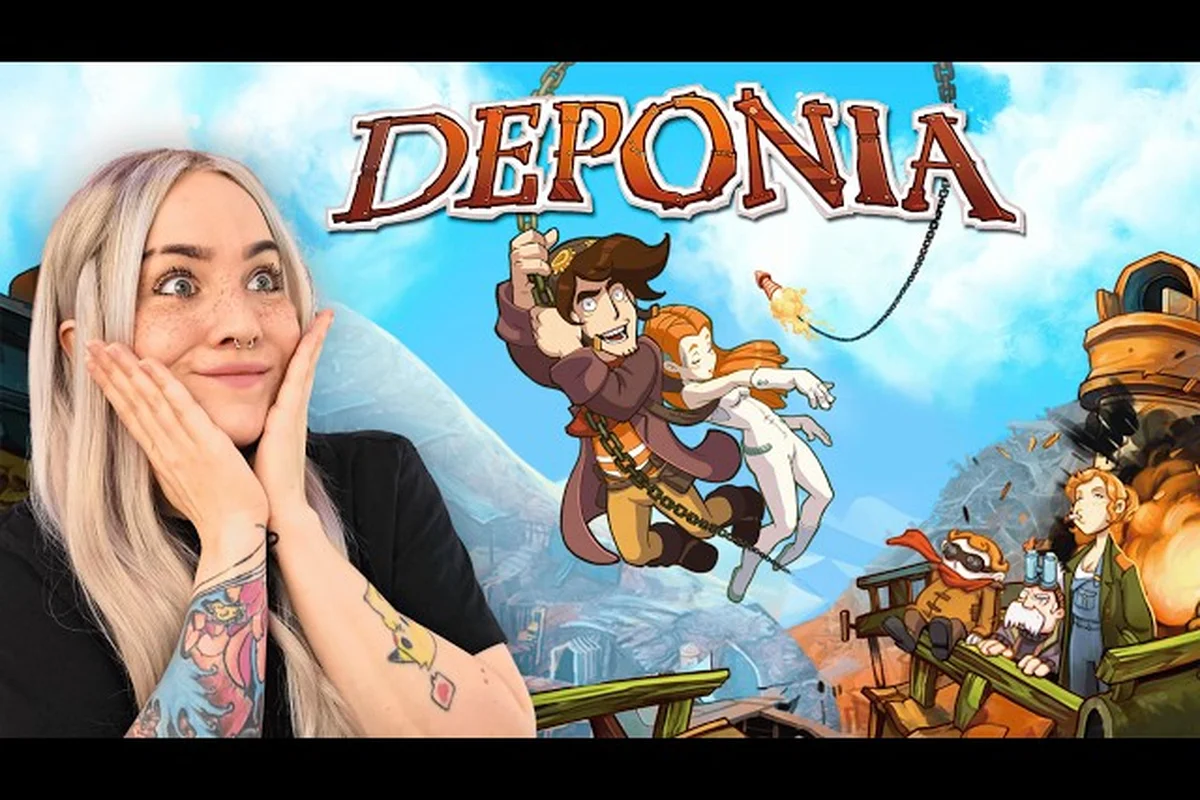
The Deponia games in chronological order form one of the most beloved point-and-click adventure sagas from German studio Daedalic Entertainment, yet newcomers often struggle to figure out where to start or which bundle actually includes everything. This guide settles that confusion once and for all by mapping the full timeline from the 2012 original through the 2016 spin-off and beyond, so you can jump straight into Rufus's chaotic journey without wasting money on overlapping purchases. Whether you are hunting for the Deponia complete collection or just want to know if the Deponia spin off is worth playing, the breakdown below covers release dates, story placement, bundle contents, and what the future holds for the franchise.
Why the Deponia Games in Chronological Order Matter for New Players
Understanding the Deponia games in chronological order matters because the series tells a continuous story with recurring characters, escalating stakes, and a finale that only lands emotionally if you have experienced the buildup across all three main entries. The original Deponia (2012) introduces Rufus, a self-proclaimed genius living on a junk planet who dreams of escaping to the floating city of Elysium. Chaos on Deponia (2012) deepens the conflict when Goal, the woman Rufus loves, gets her personality split across multiple clones. Goodbye Deponia (2013) then delivers the trilogy's dramatic conclusion, wrapping up the central narrative arc in a way that divided fans but cemented the series' reputation.
The chronological order also matters because Deponia Doomsday (2016) deliberately plays with timeline conventions. This standalone adventure is set in an alternate timeline where the original trilogy's ending never happened, which means playing it before finishing the main games would spoil major plot beats. According to the official Steam page for the Complete Journey, the trilogy should always be played in release order first, with Doomsday treated as a bonus epilogue rather than a fourth chapter.
For players who want a quick reference before diving in, here is the essential sequence:
-
Deponia (2012) — the introduction to Rufus, Goal, and the junkyard planet
-
Chaos on Deponia (2012) — the middle chapter with clone-based puzzle mechanics
-
Goodbye Deponia (2013) — the emotional finale of the main storyline
-
Deponia Doomsday (2016) — the alternate-timeline spin-off that rewards longtime fans
-
Surviving Deponia (2026) — the upcoming survival sequel set seven years later
This ordering ensures you experience character growth naturally, understand inside jokes, and appreciate the callbacks that Daedalic weaves throughout the later entries. Jumping straight into Doomsday without the trilogy context would leave you confused about why certain characters behave the way they do, since the spin-off assumes you already know the original cast intimately.
The Complete Journey vs. Full Scrap Collection: Which Bundle Wins
The Complete Journey's Bonus Content vs. Full Scrap's Four-Game Scope
The two bundles serve different player needs despite their similar pricing. The Complete Journey (2014) includes only the trilogy but adds exclusive bonus content, making it ideal for players focused on the main narrative arc. The Full Scrap Collection instead bundles all four games—the trilogy plus Doomsday—at a discount, prioritizing complete library ownership over extras. For new players, the decision hinges on whether you want the alternate-timeline spin-off immediately or prefer the curated trilogy experience with supplementary materials. The Complete Journey notably excludes Doomsday, so completionists will eventually need both purchases.
Surviving Deponia's Seven-Year Time Jump and Genre Shift
The upcoming Surviving Deponia (2026) represents a radical departure, shifting from point-and-click adventure to survival mechanics while jumping seven years after the trilogy's events. This genre change means puzzle-solving takes a backseat to resource management and environmental survival challenges. The seven-year gap allows the developers to age characters and evolve the setting without contradicting established lore. Players expecting traditional Deponia gameplay should prepare for a fundamentally different experience—inventory puzzles become secondary to managing limited supplies and navigating hostile environments. This sequel targets both nostalgic fans and newcomers attracted to the survival genre.
When shopping for the Deponia games in chronological order, you will encounter two main bundles on Steam, and picking the wrong one means either missing content or paying twice for games you already own. The Deponia: The Complete Journey bundles the original trilogy only, while the Deponia Full Scrap Collection includes all four games — the trilogy plus Doomsday. Community reports consistently note that the Full Scrap Collection offers better value for newcomers because it covers the entire playable catalog in one purchase, though the Complete Journey does include some exclusive bonus content like concept art and developer commentary.
| Bundle Feature | Complete Journey | Full Scrap Collection |
|---|---|---|
| Includes Deponia (2012) | Yes | Yes |
| Includes Chaos on Deponia (2012) | Yes | Yes |
| Includes Goodbye Deponia (2013) | Yes | Yes |
| Includes Deponia Doomsday (2016) | No | Yes |
| Bonus concept art | Yes | No |
| Developer commentary | Yes | No |
| Typical discount depth | 90% during sales | 85% during sales |
The pricing difference matters more than most players expect, because Daedalic games go on sale frequently and the discount patterns shift the value equation. During major Steam sales, the Complete Journey often drops to around $3, while the Full Scrap Collection hovers near $6 — a small gap that becomes trivial when you consider that buying Doomsday separately would cost more than the difference. If you are strictly interested in the main story and want the cheapest entry point, the Complete Journey works fine, but the Deponia full scrap collection is the smarter pick for completionists who want every piece of the franchise in one library.
There is also a practical consideration around save files and launcher integration. Both bundles run through Steam with cloud saves enabled, but the Full Scrap Collection treats each game as a separate library entry, which means achievements track independently per title. Players who enjoy hunting achievements report that this structure actually helps, because you can complete one game's list before moving to the next without worrying about cross-contamination of progress.
Deponia Doomsday: The Spin-Off That Rewrites Everything
The Deponia spin off, officially titled Deponia Doomsday, deserves special attention because it is both the most divisive entry and the one that most confuses new players about the Deponia games in chronological order. Released in 2016, three years after the trilogy concluded, Doomsday presents a "what if" scenario where Rufus wakes up on the day the original game began, forced to relive events with the knowledge of everything that came after. This premise allows the writers to revisit iconic locations, recontextualize familiar puzzles, and deliver meta-commentary on the series itself.
What makes Doomsday tricky for chronological purists is that it technically exists outside the main timeline. The events of the trilogy still happened, but Doomsday branches off into an alternate reality that never resolves back to the canonical ending. According to player experiences shared across adventure game communities, this creative choice works brilliantly as a love letter to fans but falls flat for newcomers who expect a straightforward continuation. The puzzles also lean heavily on nostalgia, referencing solutions and jokes from earlier games that only land if you have the context.
| Doomsday Feature | Details |
|---|---|
| Release year | 2016 |
| Timeline placement | Alternate reality, post-trilogy |
| Playtime estimate | 8-10 hours |
| Puzzle difficulty | Higher than trilogy average |
| Voice acting | Original cast returned |
| Ending type | Multiple, player-dependent |
The reception data tells an interesting story about quality perception across the series. The original Deponia holds a Metacritic score around 74, while Chaos on Deponia improved to 78 and Goodbye Deponia peaked at 80, suggesting the developers refined their craft with each installment. Doomsday landed somewhere in the middle, with fans split between praising its ambition and criticizing its reliance on fan service. If you are trying to decide whether the Deponia spin off belongs in your playthrough, the answer is yes — but only after completing the trilogy, because its emotional weight depends entirely on your attachment to the original cast.
Surviving Deponia: The Next Game and What It Means for the Series
Why Metacritic Scores Climb With Each Entry
The trilogy's critical reception follows a clear upward trajectory that shapes player expectations. Deponia (2012) holds a Metacritic score of 74, while Chaos on Deponia (2012) improves to 78, and Goodbye Deponia (2013) peaks at 80. This 6-point climb reflects the developers' iterative refinement of puzzle logic and pacing. New players starting with the original should expect simpler inventory-based challenges, while the sequels introduce multi-step environmental interactions that reviewers consistently praised. Understanding this progression helps you anticipate the difficulty curve—if the first game feels straightforward, the sequels will demand significantly more lateral thinking.
Doomsday's Alternate Timeline Placement in the Canon
Deponia Doomsday (2016) deliberately breaks from chronological continuity by presenting an alternate timeline that diverges from Goodbye Deponia's ending. This standalone spin-off assumes familiarity with the trilogy's conclusion but reinterprets its consequences, meaning new players should never start here. The game reuses familiar characters in radically different circumstances, rewarding veterans who recognize how the timeline has shifted. Playing Doomsday before the trilogy spoils the original ending's emotional impact while confusing newcomers with references to events they haven't experienced. Treat it as a what-if scenario that enriches, rather than continues, the main story.
The Deponia next game on the horizon is Surviving Deponia, a survival sequel announced for 2026 that shifts the franchise into an entirely new genre. Instead of the classic point-and-click adventure format that defined the earlier entries, this new release incorporates survival mechanics, resource management, and base-building elements set seven years after the events of the original trilogy. This represents a bold pivot for Daedalic, and community reactions range from cautious optimism to outright skepticism about whether the series' signature humor can translate to a genre known for tension and scarcity.
What makes Surviving Deponia particularly interesting for fans of the Deponia games in chronological order is how it positions itself within the established lore. The game reportedly follows new protagonists dealing with the aftermath of the trilogy's conclusion, which means the canonical ending remains intact rather than being retconned. Players who want to experience the full narrative arc should still play the original three games first, because Surviving Deponia will likely reference characters and events from the earlier adventures even if the gameplay loop looks completely different.
| Surviving Deponia Details | Confirmed Information |
|---|---|
| Release window | 2026 |
| Genre | Survival adventure |
| Timeline | 7 years after trilogy |
| Protagonists | New characters |
| Platform | PC (Steam) |
| Connection to trilogy | Direct sequel |
The Deponia new release also raises questions about bundle strategy for future buyers. If Surviving Deponia launches as a standalone title, the Full Scrap Collection will still represent the best way to experience the classic games, but completionists may want to wait for a potential bundle that includes the new entry. Based on Daedalic's historical pricing patterns, a complete collection including all five games would likely appear within a year of Surviving Deponia's launch, offering the deepest discount for patient players.
For those who cannot wait, the existing games remain highly replayable, and the puzzle design holds up remarkably well despite the aging art style. The hand-painted backgrounds and quirky animations give the series a timeless quality that newer adventure games rarely match, which is why the franchise continues to attract new players more than a decade after its debut. If you are new to the series, starting with the original Deponia and working through the Deponia games in chronological order remains the definitive way to experience everything the franchise has to offer.
Puzzle Design and Difficulty Progression Across the Series
One of the most frequently discussed aspects of the Deponia games in chronological order is how puzzle difficulty evolves across the four titles, and understanding this progression helps set proper expectations before you start playing. The original Deponia establishes a baseline of classic adventure game logic puzzles, where you collect items, combine them in unexpected ways, and talk to eccentric characters to unlock new areas. The difficulty curve is gentle enough for genre newcomers, though a few puzzles require the kind of lateral thinking that adventure game veterans take for granted.
Chaos on Deponia raises the bar significantly by introducing the clone mechanic, where Goal's personality is split across multiple identical-looking characters. This creates puzzles that require you to track which clone has which personality trait, remember where each one is located, and manipulate them into specific positions to progress. Community reports consistently rank this entry as the most challenging of the trilogy, with several puzzles requiring careful note-taking to solve without a walkthrough.
Goodbye Deponia continues the upward difficulty trend while adding more inventory-based puzzles that span multiple screens. The game expects you to remember details from earlier chapters, creating a sense of continuity that rewards attentive players. Doomsday, despite being a spin-off, actually features some of the most complex puzzle chains in the series, because the alternate timeline premise allows the designers to remix familiar solutions with new twists.
| Game Title | Puzzle Difficulty | Puzzle Style |
|---|---|---|
| Deponia | Moderate | Classic inventory puzzles |
| Chaos on Deponia | High | Clone manipulation, logic chains |
| Goodbye Deponia | High | Multi-screen inventory puzzles |
| Deponia Doomsday | Very High | Remixed classics, meta puzzles |
If you find yourself stuck on a particularly tricky section, the Deponia walkthrough guide breaks down every puzzle solution step by step, which is especially helpful for the later entries where the logic becomes increasingly abstract. The series never quite reaches the brutal difficulty of games like Myst, but it demands more patience than the average modern adventure title, so keeping a notebook handy is a practical strategy that veteran players recommend.
Frequently Asked Questions
What is the correct Deponia games in chronological order?
The correct order is Deponia (2012), Chaos on Deponia (2012), Goodbye Deponia (2013), and then Deponia Doomsday (2016) as a spin-off. The upcoming Surviving Deponia (2026) continues the story seven years after the trilogy. Always play the trilogy first because Doomsday assumes you know the original characters and plot.
Does the Deponia complete collection include all four games?
No, the Deponia complete collection, officially called The Complete Journey, includes only the original trilogy: Deponia, Chaos on Deponia, and Goodbye Deponia. If you want all four games including the Doomsday spin-off, you need the Deponia Full Scrap Collection instead, which bundles everything at a discounted price.
Is Deponia Doomsday worth playing after the trilogy?
Yes, Deponia Doomsday is worth playing because it offers a creative alternate-timeline story that recontextualizes the original trilogy's events. The puzzles are challenging and the humor lands well for established fans. However, newcomers should skip it until they finish the main three games, since the narrative depends heavily on prior knowledge.
What is the Deponia next game coming in 2026?
The Deponia next game is Surviving Deponia, a survival sequel that shifts away from point-and-click adventure mechanics toward resource management and base building. It takes place seven years after the trilogy and follows new protagonists. The game is scheduled for a 2026 release on PC via Steam, though exact dates remain unconfirmed.
Which bundle offers the best value for new players?
The Deponia Full Scrap Collection is the best value for new players, bundling all four games—the trilogy plus Doomsday—at a steeper discount than buying The Complete Journey and Doomsday separately. The Complete Journey only includes the three mainline entries, so you would pay more overall to add the spin-off later.