
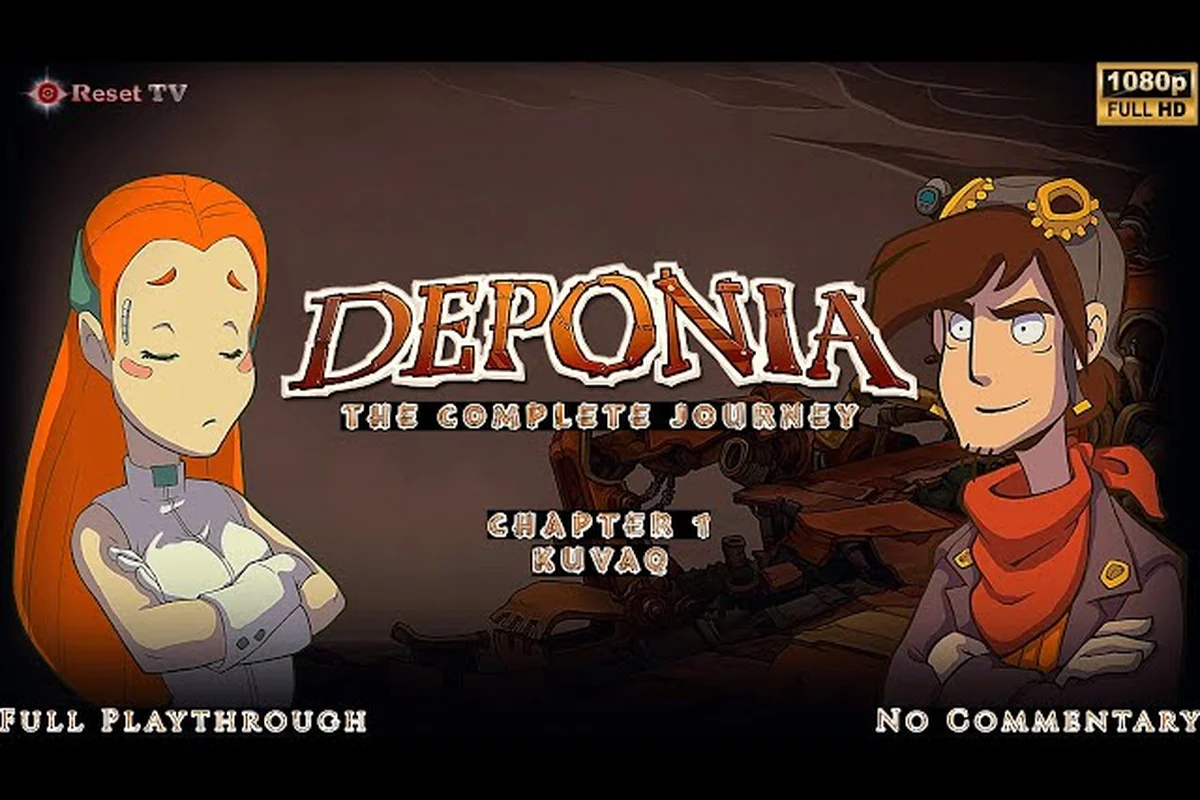
The Deponia junkyard is far more than a backdrop for Rufus's chaotic schemes—it's a fully realized world where an entire civilization scrapes by on the discarded remnants of a forgotten age. Understanding this setting matters because nearly every puzzle, character motivation, and plot twist in the series traces back to the planet's geography and social structure. The floating city of Elysium dumps its waste onto the surface below, and the people who remain have built towns, factions, and entire economies around that refuse. Get ready to map out the trash mountains, the districts of Kuvaq, and the ominous Organon HQ that keeps the junkyard under its thumb. to the surface below, and the people who remain have built towns, factions, and entire economies around that refuse. Get ready to map out the trash mountains, the districts of Kuvaq, and the ominous Organon HQ that keeps the junkyard under its thumb—and once you’ve traced the main routes through that grimy sprawl, dive into the forgotten corners of the map with our Deponia Toni deep dive, where the junkyard’s hidden alleys and scavenger camps reveal how the refuse itself shapes every power struggle above.
The Deponia Junkyard Setting and Environment
The planet Deponia operates on a brutal ecological loop that defines life for everyone stuck on the surface. According to the Deponia setting overview on Wikipedia, humans once inhabited the planet normally, but most ascended to Elysium, a floating city in the sky, leaving the rest behind to survive among the garbage. The Elysians treat Deponia as nothing more than a trash receptacle, regularly dumping refuse from above without a second thought about who might be living down there. This constant rain of waste shapes the Deponia environment in ways that affect everything from architecture to politics.
The surface itself is a sprawling Deponia junkyard where mountains of compressed trash stretch toward the horizon, and the air carries the metallic tang of rust and industrial decay. Clean water has become the most valuable commodity on the planet, more precious than gold or any salvaged technology, because the Elysians control the weather systems and rarely let rain fall on the junk below. Settlements cluster around the few reliable water sources, and the constant search for drinkable water drives much of the daily struggle for ordinary citizens.
The Deponia environment also creates a unique visual language that the games lean into heavily. Rusted ship hulls become homes, broken machinery gets repurposed into furniture, and the color palette shifts between the browns and grays of the wasteland and the occasional splash of color from a salvaged Elysian artifact. The underground and sewer systems hide secrets that even the locals have forgotten, while the garbage mines provide a dangerous but necessary way to travel across the planet. Players who explore thoroughly will find that the junkyard rewards curiosity with both practical items and lore fragments that explain how this world fell into its current state.
Kuvaq and the Major Deponia Town Districts
Kuvaq serves as the primary Deponia town in the first game, and it's where players spend most of their early hours learning the rhythms of junkyard life. The town is built into and around a massive trash heap, with structures stacked haphazardly on top of each other and connected by rickety walkways, ladders, and the occasional improvised elevator. Each district within Kuvaq has its own character, and understanding the layout helps players navigate puzzles more efficiently.
The Scrap Market and Residential Areas
The scrap market forms the commercial heart of Kuvaq, where vendors hawk everything from edible junk food to questionable mechanical parts. This is where players first encounter the barter economy that sustains the Deponia town, and it's worth noting that the market's layout changes slightly depending on the time of day and story progression. The residential areas spread outward from the market, with the wealthier citizens living higher up where the air is marginally cleaner and the view of the trash mountains is less oppressive.
The Garbage Mines and Transit Routes
Beneath Kuvaq, the garbage mines extend for miles and serve as both a resource extraction site and a transit network. The mines connect Kuvaq to other settlements across the planet, which makes them strategically important for anyone trying to move goods or people without drawing attention from the Organon. The Deponia districts beyond Kuvaq include smaller outposts and way stations that appear in later games, each with its own local customs and problems.
The Deponia town of Kuvaq also features the Drop Tower, a towering structure where the Elysians' garbage chute deposits fresh refuse from the floating city above. This location is central to the game's opening sequence and becomes a recurring landmark throughout the story. Players should pay close attention to the tower's schedule, because the timing of garbage drops affects when certain areas become accessible and when NPCs move between locations.
The Organon HQ and Their Control Over the Junkyard
The Organon represents the closest thing Deponia has to an occupying military force, and their headquarters casts a long shadow over the entire Deponia junkyard. According to the Deponia villain faction documentation, the Organon is a militant group that terrorizes the planet's inhabitants while simultaneously dumping trash onto it, creating a bizarre cycle where they both oppress the population and contribute to the waste they live in. Their leader, Prime Controller Ulysses, rules with an iron fist from a position of absolute authority.
The Deponia organon hq operates as both a military installation and an administrative center, coordinating patrols, managing the garbage drops from Elysium, and suppressing any resistance before it can gain momentum. The building itself is one of the few structures on the planet that appears genuinely well-maintained, standing in stark contrast to the crumbling architecture of the surrounding Deponia town districts. This visual distinction reinforces the power imbalance between the occupiers and the occupied.
Organon patrols are a constant presence in Kuvaq and the surrounding areas, and their behavior follows predictable patterns that observant players can exploit. The patrol routes, shift changes, and response times all operate on schedules that become more complex as the story progresses. The Deponia organon hq also houses the planet's most advanced technology, including communication equipment that can reach Elysium directly, which makes it a prime target for anyone trying to change the status quo.
The Organon's control extends beyond physical force into information control, because they regulate what the citizens of Deponia know about the outside world. This information asymmetry keeps the population compliant and prevents them from organizing meaningful resistance. The Deponia setting thus becomes a study in how environmental degradation and authoritarian control reinforce each other, with the junkyard serving as both a literal and metaphorical dumping ground for unwanted people and things.
Navigating the Deponia Districts and Key Landmarks
Understanding the geography of the Deponia junkyard requires more than just memorizing a map, because the planet's layout shifts as garbage accumulates and structures collapse. The following table breaks down the major Deponia districts and what players should expect when visiting each one:
| District | Primary Function | Key Landmarks | Danger Level |
|---|---|---|---|
| Kuvaq Market | Trade and commerce | Scrap stalls, food vendors | Low |
| Drop Tower | Elysian garbage intake | Chute, sorting area | Medium |
| Garbage Mines | Resource extraction and transit | Tunnel network, elevators | High |
| Organon HQ | Military and administrative | Barracks, communication tower | Extreme |
| Trash Mountain Slums | Residential area | Makeshift housing, water wells | Medium |
The Deponia environment rewards players who take the time to learn the shortcuts and hidden paths that connect these districts. Many of the game's puzzles require moving between areas quickly or accessing locations that aren't obvious from the main routes. The garbage mines, in particular, offer multiple paths to the same destination, and choosing the right route can save valuable time during timed sequences.
The Trash Mountains and Their Secrets
The trash mountains that dominate the Deponia skyline aren't just visual set dressing—they contain salvageable materials, hidden caches, and the occasional forgotten structure from before the Elysians left. Some of the best equipment in the game comes from exploring these unstable piles of refuse, though the risk of collapse makes them dangerous to traverse. The Deponia junkyard landscape is literally built on layers of history, and digging deeper often reveals older technology that the current inhabitants have forgotten how to use.
Water Sources and Survival Infrastructure
Clean water remains the most pressing concern for anyone living in the Deponia environment, and the infrastructure built around water collection shapes the social hierarchy of every settlement. The Organon controls the largest water purification facilities, which gives them leverage over the population beyond their military might. Smaller settlements rely on scavenged filtration systems, rain catchers, and the occasional natural spring that hasn't been contaminated by the garbage.
The Deponia Environment in Later Games and Expansions
The Deponia setting expands considerably in the sequels, introducing new locations that build on the foundation established in the first game. According to the Chaos on Deponia locations overview on Steam, later chapters add Port Fairee, a harbor town where Captain Bozo operates his trawler, along with new districts, ruins, and hidden areas that deepen the world-building. These additions show how the Deponia junkyard continues to evolve as the story progresses.
Port Fairee represents a different facet of Deponia town life, because its coastal location provides access to the ocean and the resources that come with it. The harbor town operates on a different economy than Kuvaq, with fishing, shipping, and salvage forming the backbone of local commerce. The Deponia districts introduced in the sequels each have their own visual identity and gameplay mechanics, which keeps exploration fresh even for players who mastered the original game's map.
The following table compares the major locations across the series and their unique characteristics:
| Location | Game Introduced | Notable Features | Role in Story |
|---|---|---|---|
| Kuvaq | Deponia | Drop Tower, market, mines | Main hub |
| Port Fairee | Chaos on Deponia | Harbor, trawler, docks | Travel hub |
| Elysium | Deponia | Floating city, clean environment | Antagonist base |
| Organon Facilities | Multiple | Military installations, tech | Oppression apparatus |
| Underground Ruins | Multiple | Ancient technology, secrets | Lore expansion |
The Deponia environment across all games maintains a consistent visual language while introducing enough variety to keep each location memorable. The contrast between the grimy surface and the pristine Elysium becomes more pronounced with each entry, reinforcing the central theme of inequality that drives the narrative. Players who explore the later games' locations will find callbacks to earlier areas, creating a sense of continuity that rewards series veterans.
Survival Tips and Strategies for the Deponia Junkyard
| Location | Notable Feature | Key Faction/Character | Relevance to Rufus |
|---|---|---|---|
| Kuvaq | Settlement among trash mountains | Goal, Toni | Starting point; Goal's home |
| Garbage mines | Underground passage across planet | Organon patrols | Route to Organon HQ |
| Organon HQ | Militant base; trash dumping operations | Prime Controller Ulysses | Main antagonist stronghold |
| Elysium | Floating city above Deponia | Elysians | Ascended residents; source of trash |
| Port Fairee | Harbor town with trawler | Captain Bozo | Transport aid in sequels |
Navigating the Deponia junkyard requires practical knowledge that goes beyond simply following the main story path. The following strategies come from community experience and player reports, and they can help newcomers avoid common pitfalls while making the most of their time on the planet.
Salvage everything you can carry, because even seemingly useless items often become essential puzzle solutions later. The game's inventory system encourages experimentation, and many puzzles have multiple solutions that require different combinations of items. The Deponia environment is designed so that thorough exploration always yields useful resources, so check every container and examine every suspicious pile of trash.
Learn the patrol schedules of the Organon soldiers in each area. The Deponia organon hq and its surrounding zones operate on predictable routines, and timing your movements to avoid detection makes stealth sequences significantly easier. Some areas become completely inaccessible during certain patrol windows, so plan your route accordingly.
Prioritize water management when exploring remote areas of the Deponia junkyard. While the game doesn't track hydration as a survival mechanic, water-related puzzles and NPC requests appear frequently enough that carrying extra water containers saves backtracking. The Deponia setting treats water as a currency of sorts, and having surplus gives you bargaining power in conversations.
Talk to every NPC multiple times, because dialogue options expand as the story progresses and characters reveal new information after major events. The Deponia town residents often provide hints about puzzles, hidden areas, and upcoming story beats that aren't available anywhere else. Community reports consistently highlight that players who exhaust dialogue options find the game significantly easier to navigate.
Save before entering new districts, because the Deponia districts introduced later in the game often contain traps, timed sequences, or encounters that can catch players off guard. The game's save system allows for multiple slots, so maintaining a rotating set of saves protects against getting stuck in unwinnable states. The Deponia environment can be unforgiving, but proper save management eliminates most frustration.
The Deponia junkyard also rewards players who pay attention to environmental storytelling. The placement of objects, the condition of buildings, and the dialogue of background characters all contribute to a richer understanding of how this world functions. Taking time to appreciate these details enhances the experience without requiring any additional gameplay effort.
Frequently Asked Questions
What is the Deponia junkyard planet?
Deponia is a junk planet where most of humanity ascended to the floating city of Elysium, leaving the rest to survive among the garbage that Elysium continuously dumps from above. The surface is covered in trash mountains, with settlements like Kuvaq built into the refuse. Clean water is the most valuable resource on the planet.
Where is the Organon HQ located?
The Deponia organon hq is a military and administrative installation that operates as the center of Organon control over the planet. It houses advanced technology, communication equipment that can reach Elysium, and the leadership structure under Prime Controller Ulysses. The building stands out for being well-maintained compared to the surrounding junkyard.
How do the Deponia districts connect to each other?
The Deponia districts connect through a network of garbage mines, surface roads, and improvised transit systems. The garbage mines provide the most reliable long-distance travel, though they carry risks from collapses and Organon patrols. Later games add Port Fairee and other locations that expand the travel network significantly.
What makes the Deponia environment unique?
The Deponia environment is defined by its status as a dumping ground for Elysium, with constant garbage drops shaping the landscape and economy. The contrast between the polluted surface and the clean floating city creates the central tension of the series. The environment directly influences gameplay through puzzle design and resource management.
Why is water so important in the Deponia setting?
Clean water is the most valuable commodity on the junkyard planet because the Elysians treat Deponia as a trash dump and rarely let rain fall, while the Organon controls the largest purification facilities. This scarcity gives the Organon leverage over settlements like Kuvaq, making water both a survival necessity and a symbol of Elysium’s inequality.